If you came here for the actual World Cup 2026 tie-break order, start here: tied teams are separated by head-to-head results before FIFA moves to overall goal difference.
The format also keeps third place alive. The top two in every group qualify automatically, then the eight best third-place teams join them in the round of 32.
That is why this page is separate from the live standings. The standings show the table; this guide explains why the table may order teams in a way that is not obvious from points and GD alone.
For the live table, use World Cup 2026 standings. For the names and kickoff order alongside this explainer, open the full 2026 World Cup team list and the full match schedule first.
The rule summary below follows FIFA's official groups and tie-breakers explainer published on April 19, 2026.
At a glance
Teams
48 in 12 groups of four
Automatic spots
Top two in each group = 24 teams
Third-place spots
Best eight third-placed teams
First decider
Head-to-head points, not overall GD
Last resort
Latest published FIFA ranking
The FIFA World Cup 2026 group stage has 48 teams split into 12 groups of four.
Each team plays the other three sides in its group once. After those three matches, the table is ranked and the knockout picture starts to form.
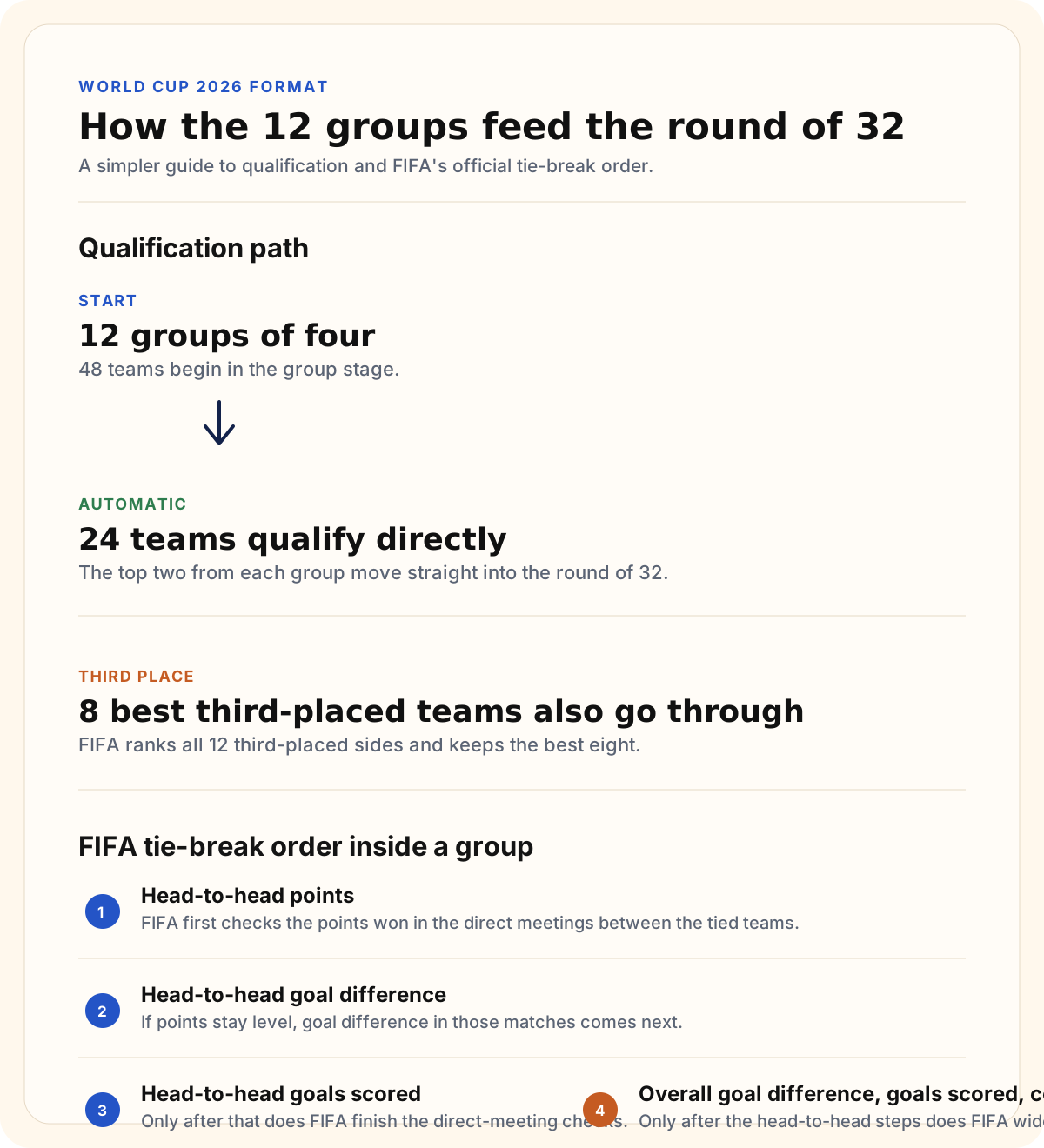
Graphic: 2026 Football News, based on FIFA's published World Cup 2026 groups and tie-break rules.
Put simply, the top two teams in each group qualify automatically. The eight best third-place teams across all 12 groups also qualify, which brings the tournament to a 32-team knockout bracket.
Inside each group, the table still works in a familiar way: first and second go through, third may still survive, and fourth is out.
The unusual part comes after that. Once the 12 group winners and 12 runners-up are locked in, FIFA compares all 12 third-place teams across the tournament. The best eight move on.
How the 32 places in the round of 32 are filled
Official qualification path from the 12 groups
| Group finish | What happens | How many teams |
|---|---|---|
| 1st | Automatic qualification | 12 |
| 2nd | Automatic qualification | 12 |
| 3rd | Compared across all 12 groups; best eight qualify | 8 |
| 4th | Eliminated after the group stage | 12 |
This is the structural change that expands the tournament from a 24-team group-stage exit pool to a 32-team knockout bracket.
Third place is no longer a dead end by default. In some groups, finishing third will still be enough to stay alive.
This is one of the biggest differences from older World Cups. In previous formats, third often meant out. This time, third can still be good enough, depending on points, goal difference, goals scored, team conduct score and the latest published FIFA ranking.
The result is a busier final group matchday. Fans are no longer watching only their own table; they are also comparing one group's third-place team with another group's third-place team later in the evening.
How FIFA ranks the 12 third-placed teams
Official order used to compare third-placed teams from different groups
| Rank step | What FIFA compares |
|---|---|
| 1 | Points in all group matches |
| 2 | Goal difference in all group matches |
| 3 | Goals scored in all group matches |
| 4 | Highest team conduct score |
| 5 | Latest published FIFA/Coca-Cola Men's World Ranking |
Head-to-head is not used here because the third-placed teams are being compared across different groups, not inside one shared table.
Want to see where your team stands right now? Check the live World Cup 2026 standings.
This is the part most people search for on matchday.
If teams finish level on points in the group stage, FIFA first checks the matches played between the tied teams. It starts with head-to-head points, then head-to-head goal difference, then head-to-head goals scored.
If that still does not separate them, FIFA moves to wider group-stage criteria: overall goal difference in all group matches, overall goals scored, highest team conduct score and, finally, the latest published FIFA/Coca-Cola Men's World Ranking.
A lot of fans assume overall goal difference is the first decider. It is not. The direct meeting comes first.
Official tie-break order inside a group
How FIFA separates teams that finish level on points in the same group
| Step | Tie-break | Why it matters |
|---|---|---|
| 1 | Head-to-head points | The first look is always the direct meeting between the tied teams. |
| 2 | Head-to-head goal difference | If the tied teams still match on points, FIFA checks the goal margin in those direct games. |
| 3 | Head-to-head goals scored | Goals in the direct meetings still matter before the wider group numbers do. |
| 4 | Overall goal difference | Only after the direct-meeting steps are exhausted does FIFA move to all group matches. |
| 5 | Overall goals scored | This still uses all three group matches, not just the head-to-head game. |
| 6 | Highest team conduct score | Disciplinary record becomes relevant if the football numbers still cannot split the teams. |
| 7 | Latest published FIFA/Coca-Cola Men's World Ranking | This is the final listed separator if the rest of the chain stays level. |
The common mistake is jumping straight to overall goal difference. FIFA's published explainer puts the direct meeting first.
Picture the last night of Group F. You are refreshing your phone close to midnight and two teams are locked on four points, separated by a single goal. The first thing you need is not the full table. You need the result of the match between those two teams, because FIFA checks that first.
Most fans barely think about this before kickoff, but once the table tightens it becomes crucial.
A late goal can still change everything, just not always in the way people assume. Sometimes it changes overall goal difference. Sometimes it changes who stays alive in the third-place race. Sometimes it changes nothing at all because the direct meeting between the tied teams already settled it.
Once the 24 automatic qualifiers and eight best third-place teams are confirmed, the tournament moves into a round of 32.
From there, the bracket becomes more familiar: round of 32, round of 16, quarter-finals, semi-finals and the final.
For viewers, this is not just an administrative tweak. It changes how the tournament feels.
A wider qualification path keeps more nations alive, stretches the tension deeper into the group stage, and makes the last round of matches harder to read at a glance. One table is no longer enough. You often need your own group, the third-place comparison and the schedule open at the same time.
To be fair, FIFA has made the format a bit more complicated than before, but for neutral fans that extra layer should make the final group games more dramatic.
If you are following the bigger picture, keep the live standings nearby while the groups play out. Kick-off order and late score swings could shape qualification stories right up to the final whistle.
Quick answers
Can third-place teams still qualify from the World Cup 2026 groups?
Yes. Eight third-place teams qualify for the round of 32 from the World Cup 2026 groups.
How many teams advance from the group stage?
Thirty-two. The top two from each of the 12 groups go through automatically, and the eight best third-place teams join them.
How are third-place teams compared across the 12 groups?
FIFA compares the 12 third-placed teams using totals from all group matches: points first, then goal difference, goals scored, team conduct score, and finally the latest published FIFA/Coca-Cola Men's World Ranking.
What is the first World Cup 2026 tie-breaker?
For teams level on points inside the same group, FIFA first checks head-to-head points from the matches played between those tied teams.
How do FIFA tie-breakers work after head-to-head?
Inside a group, FIFA starts with the matches between the tied teams: head-to-head points, head-to-head goal difference, and head-to-head goals scored. Only after that does it move to wider group-stage numbers.
What happens if three teams finish level on points?
FIFA applies the same head-to-head criteria to the matches played among the tied teams. If that mini-table still does not separate them, it moves to overall group-stage numbers and then to team conduct score and the latest published FIFA ranking.
Where can I see the live World Cup 2026 groups table?
Use the standings page for the live table. This guide explains how to read it, how third-place teams are ranked, and how tie-breakers work.
The top two teams in each of the 12 World Cup 2026 groups advance automatically. They are joined by the eight best third-place teams. If sides finish level on points, FIFA first checks the matches between the tied teams before moving to wider group-stage numbers.
Once you know that order, the format stops looking intimidating. It becomes something you can follow match by match.
Coverage trust
Coverage trust and verification
This story is checked against official tournament and federation material, then updated as the public record changes.